
Table of Contents
What Is a Digital Product Agency? (And Do You Actually Need One?)

A digital product agency is a team that helps businesses plan, design, and build software like mobile apps and web tools.
Unlike a basic coding shop that just writes code to order, a product agency works with you to figure out what your users actually want, designs simple screens, builds the software, and helps it succeed after launch.
Imagine building a home from scratch.
If you hire a general worker and say, “Put up four walls and a roof,” they will build that. But if nobody checked where the doors, plumbing, or power lines go, you end up with a box nobody can live in.
That is the difference between a plain software coding shop and a digital product agency. A coding shop builds what you tell them to build. A digital product agency asks: “Is this what your actual customers want and need?”
Whether you are launching a brand-new app, upgrading an old business tool, or building software for users in global or local markets, choosing the right team determines if your product succeeds or fails.
Do You Actually Need a Digital Product Agency?

Not every project requires a full-fledged agency. If you just need a basic 5-page WordPress site or a minor feature fix, hiring a full team is overkill. However, if you are building software from scratch or trying to scale an app, hiring an agency can save you months of wasted effort and budget.
Here is a clear breakdown to help you decide which path makes sense for your current stage:
1. You DO Need an Agency If:
- You Have a Concept but No In-House Tech Team: You know your market and business model inside out, but you lack dedicated product managers, UI/UX designers, and software engineers to bring it to life.
- Your In-House Team is Overstretched: Your existing developers are bogged down maintaining day-to-day operations and cannot dedicate the focused time needed to design and launch a major new product.
- You Need Speed-to-Market: Assembling, interviewing, and onboarding an in-house team of designers and engineers can take 3 to 6 months. A digital product agency gives you an elite, pre-assembled team ready to start immediately.
- You Want Business Strategy, Not Just Lines of Code: You need partners who will challenge your assumptions, test features with real users, and ensure you do not spend tens of thousands of dollars building something nobody wants.
2. You DO NOT Need an Agency If:
You Have a Very Micro Budget: Full service agencies bring deep expertise across multiple disciplines. If your total budget is under a few hundred dollars, starting with simple no code builders (like Webflow, Bubble, or Shopify) is a smarter initial move.
You Only Need Simple Web Maintenance: If you need routine updates, basic content uploads, or minor bug fixes on an existing website, a freelance developer or internal site manager is far more cost-effective.
You Have a Fully Staffed, Specialized Tech Team: If you already employ full time UX researchers, frontend/backend developers, and product managers with free capacity, you can build in-house.
What Services Does a Digital Product Agency Offer?
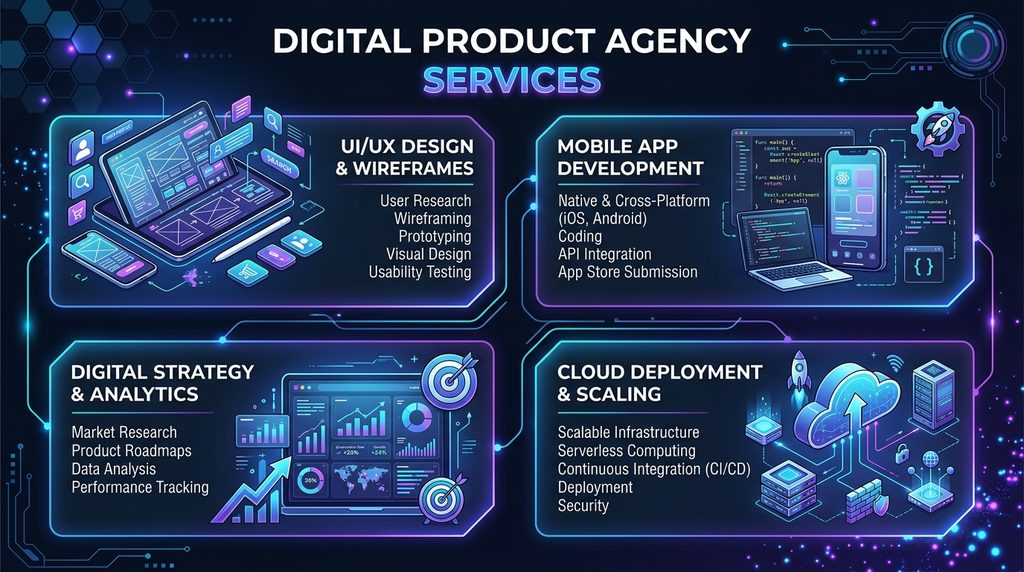
When you partner with a digital product agency, you get access to a full team of strategy and design experts.
A great agency doesn’t just write code; they guide your product from an initial idea to a successful, revenue generating tool.
Here is a breakdown of what happens during each phase of the journey:
1. Product Discovery & Validation
Before writing a single line of code, the agency makes sure people actually want and need your app. They talk directly to prospective users, analyze competitor strengths and weaknesses, study market trends, and map out the core essential features. This phase prevents you from wasting thousands of dollars building products nobody will use.
2. User Experience (UX) & UI Design
Once the feature list is validated, designers create wireframes and visual screens. The goal is to build an intuitive, frictionless interface where users can accomplish their tasks quickly without feeling confused, overwhelmed, or tempted to close the app.
3. Quality Software Engineering
Developers turn those visual designs into functional, secure, and lightning fast software. They write clean code optimized for reliable performance across desktop screens, mobile devices, varying operating systems, and even spotty internet connections.
4. Post Launch Growth & Continuous Updates
The work isn’t over when the app goes live. After launch, the agency tracks real time user behavior, monitors performance analytics, fixes bugs, and releases regular feature updates based on actual customer feedback to keep people coming back.
Agency vs. Dev Shop vs. In-House Team
Choosing how to build your software comes down to budget, speed, and business goals.
| Factor | Digital Product Agency | Traditional Dev Shop | In-House Team |
| Main Focus | Strategy, Design & Code | Pure Coding | Long-Term Internal Management |
| Speed to Market | Fast (3 to 6 months) | Fast (2 to 4 months) | Slow (Hiring takes time) |
| Business Risk | Low (Idea is tested first) | High (Might build the wrong thing) | Medium |
| Cost Model | Project-Based or Retainer | Hourly or Fixed Rate | Full-Time Salary and Benefits |
3 Signposts You Need a Product Partner
Not every project needs a full product agency. If you already have clear design blueprints, market research, and a team lead, a simple coding shop can work fine.
However, partnering with a full agency makes sense if:
- You have a big idea but no clear plan: You know what problem you want to solve, but you do not know which features to build first.
- People download your app, but stop using it: High drop-off rates usually mean the design is hard to use or the app is not solving the right problem.
- You need to launch quickly without hiring full-time staff: Finding senior software engineers, product leaders, and designers takes months you may not have.
Building for Your Specific Audience
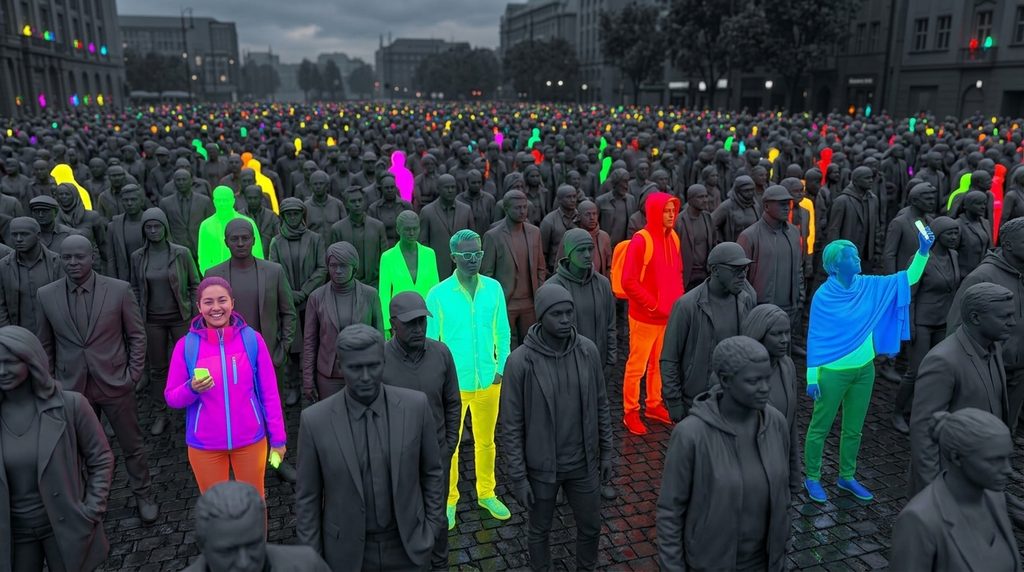
Software isn’t one-size-fits-all. The way people use an app in New York or London isn’t always how someone will use it in Lagos, Nairobi, or São Paulo. A good product agency helps you design for the actual daily lives, devices, and internet conditions of your real-world users.
1. High-Compliance & Global Markets (US, Europe, Canada)
When you are building for users in heavily regulated regions, trust and smooth design are everything:
- Keeping Data Safe & Legal: People and governments in these areas are very strict about privacy. You need clear consent forms, safe data storage, and strict compliance with global privacy laws (like GDPR in Europe or CCPA in California) so you don’t face massive fines or lose customer trust.
- Making It Accessible for Everyone: Your app should be easy to use for people with physical or visual impairments. This means supporting screen readers, offering high-contrast color modes, and ensuring simple keyboard navigation.
- Easy, Self-Serve Onboarding: Users in these markets expect to sign up and figure out the app on their own within seconds. If the sign-up process is confusing or requires too many manual steps, they will close the tab and try a competitor.
2. Mobile-First & Emerging Markets (Africa, Southeast Asia, Latin America)
Building for fast growing, mobile heavy regions requires a practical, resource smart tech setup:
- Lightweight Code & Speed: Many users rely on budget smartphones with limited storage space. If your app is too heavy or eats up too much phone memory, people will delete it to save space.
- Saving Mobile Data: Data plans can be expensive, and internet speeds often fluctuate between 3G and 5G. Writing efficient code that loads quickly without burning through a user’s monthly data package makes your app much more friendly to use.
- Offline Functionality: Networks drop out all the time. Designing your software to save user work offline and automatically sync up once a connection returns keeps people from losing their progress or getting frustrated.
- Local Payment Options: Credit card adoption varies around the world. To actually make sales, your app needs to connect seamlessly with the payment methods people actually use daily, whether that’s mobile money transfers, USSD codes, digital wallets, or local bank apps.
Building with these real world conditions in mind ensures your software feels natural, fast, and reliable to your target users, no matter where they log in.
Choosing the right digital product agency ensures your app is built to scale smoothly from day one.
Related Guides & Resources
- Get a Free Marketing & Strategy Audit : Planning a product launch or trying to revamp an existing app? Get a personalized breakdown of how to position your brand for real growth, reach the right buyers, and keep a steady stream of traffic coming to your site.
- Digital Marketing Services & Consulting : Building a great product is only half the battle; getting people to use it is the rest. Explore simple, proven strategies to scale your software, SaaS platform, or digital tool through targeted content and smart SEO.