Table of Contents
In today’s digital marketplace, having a strong social media presence is no longer optional for many small businesses. Customers use platforms such as Facebook, Instagram, TikTok, LinkedIn, and other social networks to discover businesses, research products, read reviews, communicate with brands, and make purchasing decisions.
However, managing social media effectively can be challenging for a small business owner. Creating content, responding to customers, running advertisements, analyzing performance, and maintaining a consistent posting schedule all require time and expertise.
This is where a social media marketing for small business agency can make a significant difference.
A professional agency can help small businesses develop a social media strategy, create engaging content, reach the right audience, generate leads, increase brand awareness, and ultimately support business growth.
What Is Social Media Marketing for Small Businesses?
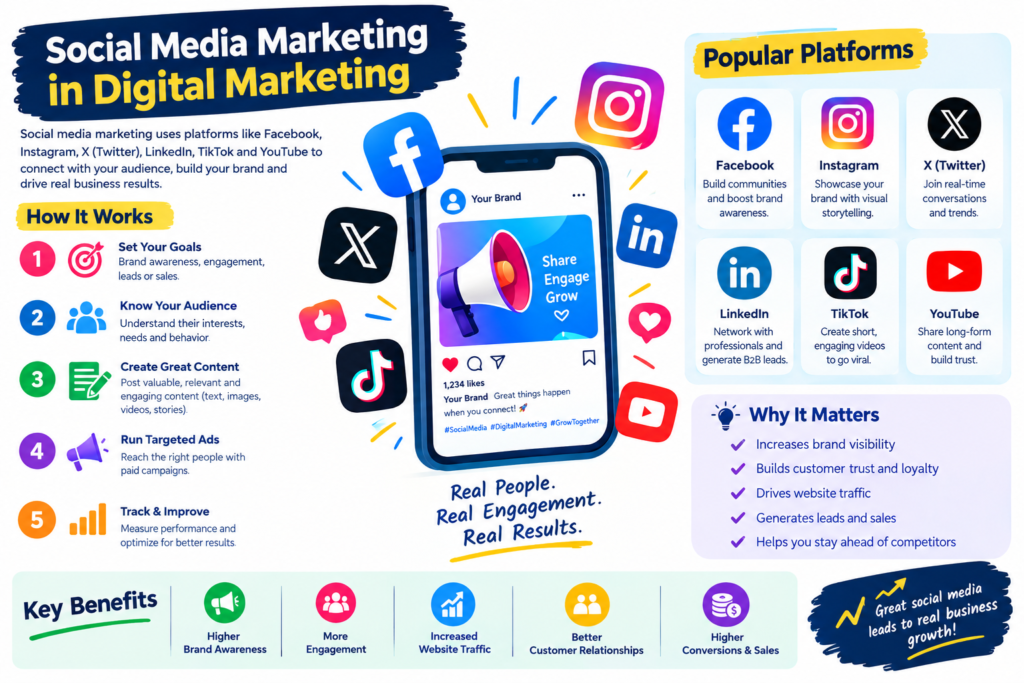
Social media marketing is the process of using social media platforms to promote a business, communicate with customers, build brand awareness, generate leads, and increase sales.
For a small business, social media can provide an affordable way to compete with larger companies. Instead of relying entirely on traditional advertising, a small business can use social platforms to build relationships directly with potential customers.
For example, a local restaurant can use Instagram to showcase its meals, Facebook to promote special offers, and TikTok to create short videos that introduce its food and customer experience.
A professional social media marketing agency helps businesses turn these activities into a structured marketing strategy.
Why Do Small Businesses Need Social Media Marketing?
Small businesses often have limited budgets and resources. This makes it important to invest marketing money and time in channels that can reach the right customers.
Social media offers several advantages.
1. Increased Brand Awareness
People cannot buy from a business they do not know exists.
Social media allows small businesses to consistently introduce their brand to potential customers.
Through videos, images, educational posts, customer stories, product demonstrations, and promotional content, businesses can increase their visibility.
Over time, consistent exposure can help customers recognize and remember a brand.
2. Direct Customer Engagement
Social media is more than an advertising platform.
It allows businesses to communicate directly with their customers.
Customers can ask questions, comment on posts, send direct messages, and provide feedback.
A small business that responds quickly and professionally can build stronger relationships with its audience.
3. Lead Generation
Social media can also support lead generation.
Businesses can use content, advertisements, landing pages, lead forms, and direct messages to encourage potential customers to provide their contact information or request more information.
For example, a professional service company could publish educational content and invite interested customers to book a consultation.
4. Increased Website Traffic
Social media can direct users to a business website.
Blog posts, product pages, service pages, landing pages, and special offers can all be promoted through social platforms.
This can create another source of traffic beyond search engines.
5. Increased Sales
Ultimately, most businesses want marketing to contribute to revenue.
Social media can help move customers through different stages of the buying journey.
A person may first discover a business through a social media video, follow the account, engage with several posts, visit the website, and eventually become a customer.
What Does a Social Media Marketing Agency Do?
A social media marketing agency provides professional services designed to help businesses manage and grow their social media presence.
Depending on the agency, services may include:
- Social media strategy
- Audience research
- Competitor research
- Content creation
- Graphic design
- Short-form video creation
- Social media management
- Community management
- Paid social advertising
- Influencer marketing
- Social media analytics
- Performance reporting
- Brand management
The agency’s job is not simply to publish posts. It should develop a strategy that connects social media activity to the business’s wider objectives.
Social Media Strategy for Small Businesses
A successful social media campaign starts with a clear strategy.
Identify Your Target Audience
The first step is understanding who you want to reach.
A small business should consider factors such as:
- Age
- Location
- Interests
- Profession
- Purchasing behavior
- Problems
- Needs
- Online behavior
For example, a local fashion business targeting young adults may use a different social media strategy from a business selling professional accounting services.
Choose the Right Platforms
A business does not necessarily need to be active on every social media platform.
The right platforms depend on the target audience and type of business.
Instagram and TikTok can be useful for visually driven brands. LinkedIn may be particularly valuable for B2B companies and professional services. Facebook can be useful for many local and community-focused businesses.
An experienced agency can help determine which platforms deserve the most attention.
Content Creation for Small Businesses
Content is one of the most important components of social media marketing.
However, businesses should avoid creating content simply for the sake of posting.
Every piece of content should have a purpose.
A social media agency may create several types of content, including:
Educational Content
Educational posts answer customers’ questions and demonstrate expertise.
Examples include:
- How-to guides
- Industry tips
- Frequently asked questions
- Tutorials
- Mistakes to avoid
- Expert advice
Promotional Content
Promotional posts highlight products, services, discounts, events, or special offers.
However, businesses should avoid making every post a sales advertisement.
Entertaining Content
Entertainment can increase engagement and help humanize a brand.
Short videos, relatable posts, behind-the-scenes content, and creative storytelling can make a business more memorable.
User-Generated Content
Customer photos, testimonials, reviews, and videos can provide social proof.
Potential customers often want to know whether other people have had positive experiences with a business.
Social Media Advertising for Small Businesses
Organic social media is useful, but paid advertising can help businesses reach specific audiences more quickly.
Social media advertising allows businesses to target audiences based on factors such as location, interests, demographics, and online behavior, depending on the platform and available targeting options.
A social media marketing agency can help with:
- Campaign setup
- Audience targeting
- Ad creative
- Ad copy
- Budget management
- Conversion tracking
- Retargeting
- A/B testing
- Campaign optimization
For example, a local business may create an advertising campaign specifically for people within its service area.
Why Hire an Agency Instead of Doing Social Media Yourself?
Many small-business owners try to manage social media themselves.
This can work, especially when the business is starting out. However, social media management can become time-consuming.
A business owner may need to spend several hours each week:
- Planning content
- Writing captions
- Creating graphics
- Recording videos
- Scheduling posts
- Responding to messages
- Monitoring comments
- Reviewing analytics
- Managing advertisements
Hiring an agency allows the business owner to focus on other important areas of the company.
An experienced agency can also bring specialized knowledge and tools that may take years to develop independently.
How to Choose the Best Social Media Marketing Agency for Your Small Business
Choosing an agency is an important decision.
Here are several factors to consider.
1. Check Their Experience
Look for an agency with experience working with businesses similar to yours.
Ask about previous campaigns and the types of businesses they have supported.
2. Review Their Portfolio
A portfolio can help you understand the agency’s content quality, creativity, branding, and strategic approach.
Do not focus only on how attractive the posts look. Consider whether the content appears designed to achieve business objectives.
3. Ask About Their Strategy
A good agency should not immediately suggest posting every day without first understanding your business.
Ask how they plan to:
- Identify your target audience
- Choose platforms
- Develop content
- Generate leads
- Measure results
- Optimize campaigns
4. Understand Their Pricing
Social media agency pricing varies depending on the services provided.
Some agencies offer monthly packages, while others provide customized plans.
Before signing an agreement, understand exactly what is included.
Ask whether the package covers:
- Content creation
- Graphic design
- Video production
- Posting
- Community management
- Paid advertising
- Reporting
- Strategy meetings
Also clarify whether advertising spend is separate from the agency’s management fee.
5. Look at Communication
Communication can have a major impact on the success of an agency relationship.
Choose an agency that provides clear communication, realistic expectations, and regular updates.
How Much Does Social Media Marketing Cost?
There is no universal price for social media marketing.
The cost can depend on:
- Number of platforms
- Number of posts
- Content complexity
- Video production
- Advertising budget
- Community management
- Strategy requirements
- Agency experience
- Business goals
A small business should focus on value rather than simply choosing the cheapest agency.
An inexpensive package may not provide the level of strategy, content, or management needed to achieve meaningful results.
Measuring Social Media Marketing Success
One of the biggest mistakes businesses make is measuring social media success only through likes and followers.
These metrics can be useful, but they do not always demonstrate business value.
A professional agency should monitor metrics related to your objectives.
These can include:
- Reach
- Engagement
- Website traffic
- Leads
- Messages
- Calls
- Sales
- Conversion rate
- Cost per lead
- Advertising return on investment
For example, an account with 5,000 followers may generate fewer leads than an account with 1,000 highly relevant followers.
The quality of the audience matters.
Common Social Media Marketing Mistakes
Small businesses should avoid several common mistakes.
Inconsistent Posting
Posting regularly helps businesses maintain visibility and keep their audience engaged.
Focusing Only on Selling
Customers do not want every post to be a sales pitch.
Educational, entertaining, inspirational, and community-focused content should also be part of the strategy.
Ignoring Comments and Messages
Social media is a two-way communication channel.
Ignoring customers can create a poor impression of your brand.
Using the Same Content Everywhere
Different platforms have different audiences and content formats.
A successful strategy adapts content to the platform rather than simply copying and pasting every post.
Not Tracking Results
Without analytics, it is difficult to know what is working.
Businesses should regularly review performance and adjust their strategy.
The Future of Social Media Marketing for Small Businesses
Social media continues to evolve rapidly.
Short-form video, creator content, social commerce, personalized advertising, artificial intelligence, and community-driven marketing are changing how businesses communicate with customers.
For small businesses, this creates both opportunities and challenges.
The businesses most likely to benefit are those that remain adaptable, understand their customers, create valuable content, and consistently measure their performance.
Working with a professional social media marketing agency can help small businesses keep up with these changes without having to manage every aspect themselves.
Conclusion
Social media marketing can be a powerful growth tool for small businesses.
It can help increase brand awareness, build relationships with customers, generate leads, drive website traffic, and support sales.
However, successful social media marketing requires more than simply creating an account and posting occasionally.
A professional social media marketing for small business agency can provide the strategy, content, advertising, analytics, and ongoing management needed to build a stronger online presence.
When choosing an agency, look beyond follower counts and attractive graphics. Consider its experience, strategy, communication, reporting, pricing, and ability to connect social media activity with real business objectives.
The right agency should become more than a content provider. It should become a marketing partner that understands your business and works toward measurable growth.
For small businesses looking to compete in an increasingly digital marketplace, investing in a well-planned social media marketing strategy can be an important step toward building visibility, trust, customer relationships, and long-term growth.