Table of Contents
The integration of the internet in marketing has fundamentally reshaped how commerce functions across the globe. Before the digital age, businesses relied exclusively on traditional media like print publications, radio broadcasts, and television commercials to capture consumer attention. The emergence of the internet in marketing replaced these one-way broadcast methods with dynamic, interactive communication channels.
A Brief History of Internet in Marketing
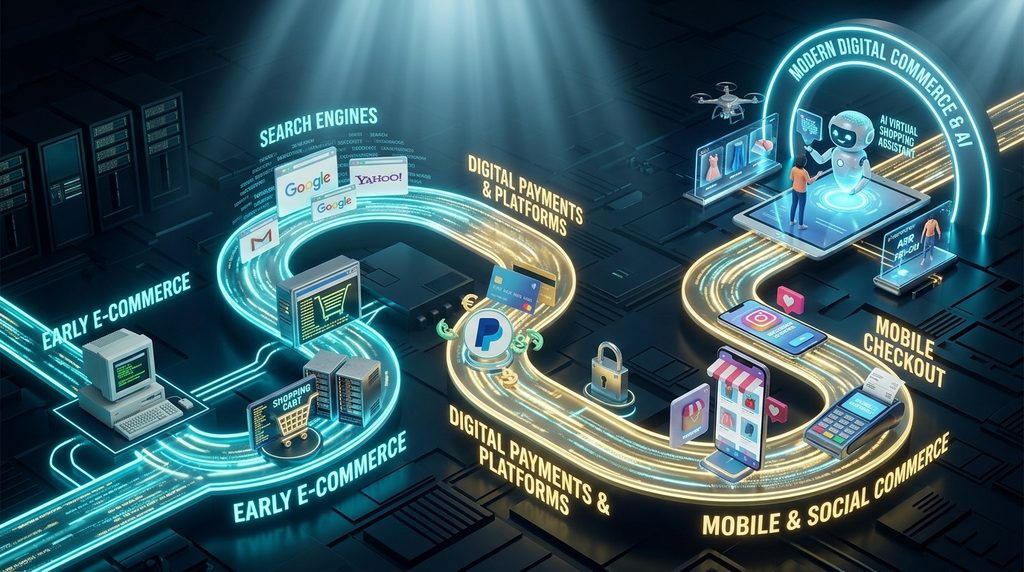
Understanding the origins of the internet in marketing clearly highlights just how rapidly digital commercial channels have continuously evolved and transformed global businesses over recent decades.
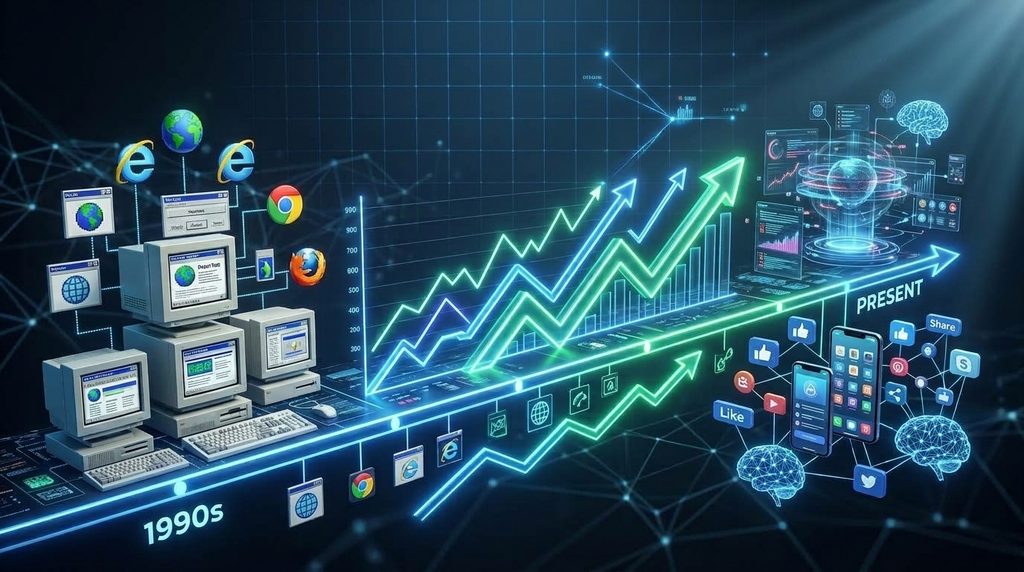
- The Early 1990s: In the early 1990s, the launch of the World Wide Web changed business forever by introducing the very first clickable banner ads. This pivotal moment marked the official beginning of internet marketing, giving brands a brand-new way to display ads and connect directly with online audiences.
- The Late 1990s and Early 2000s: Search engines like Yahoo, AltaVista, and Google emerged and changed how people found information. This shift made search engine optimization (SEO) and pay-per-click (PPC) advertising essential strategies for businesses competing to reach active online buyers.
- The Mid-2000s: The rise of social media platforms like MySpace, Facebook, and YouTube transformed the internet in marketing. Instead of just pushing one-way ads, businesses could now build active online communities, talk directly with customers, and drive real consumer engagement.
- The 2010s to Present: The explosion of smartphones and mobile internet, alongside platforms like Instagram, TikTok, and X (Twitter), turned marketing into a 24/7 channel. At the same time, advanced data analytics and AI allowed businesses to track user behavior, creating modern digital ecosystems that deliver hyper-personalized content, ads, and recommendations straight to individual consumers.
Essential Functions of Online Channels
| Strategic Focus | Primary Objective | Value Proposition |
| Search Engine Strategy | Capture high-intent queries | Connects brands with active buyers immediately |
| Social Content | Engage active communities | Builds brand affinity and customer trust |
| Direct Email Systems | Retain existing audiences | Drives consistent repeat engagement |
Why the Internet in Marketing is Essential Today
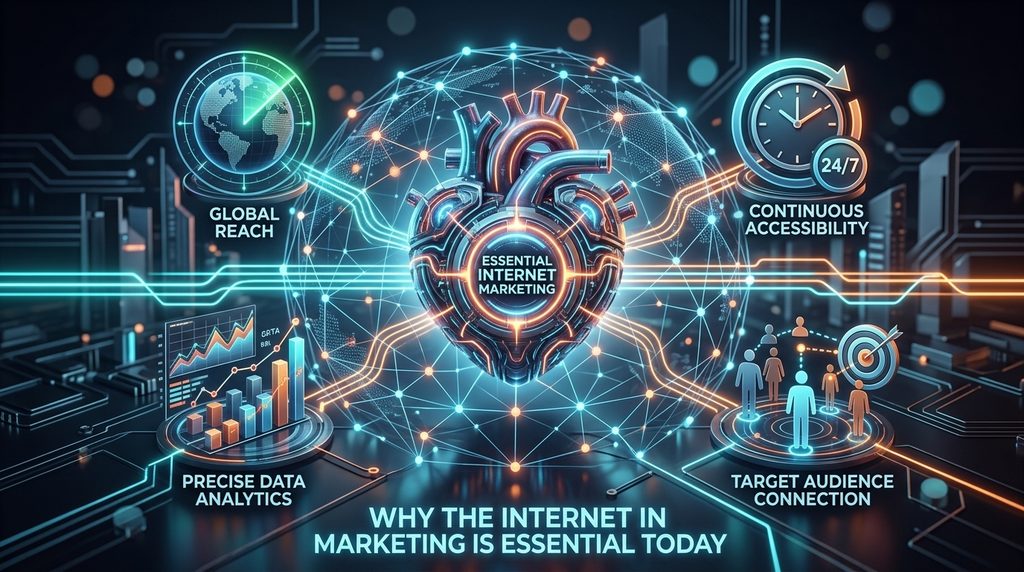
The reliance on the internet in marketing stems from its unique ability to combine hyper-targeted reach with real-time performance tracking. Unlike traditional media channels, online platforms allow organizations to measure exact consumer engagement and refine operational strategies continuously.
By utilizing granular data analytics, businesses can dynamically optimize campaigns, lower customer acquisition costs, enhance brand visibility, and achieve sustainable long-term revenue growth
- Measurable Performance: Organizations using modern web strategies can track every impression, click, and conversion with complete precision. Unlike traditional channels, leveraging digital platforms allows businesses to analyze real-time customer data, monitor exact return on investment, and immediately refine campaign performance for maximum impact.
- Level Playing Field: Utilizing modern online tools enables small local enterprises to compete directly alongside global corporations. By focusing on targeted content, niche SEO strategies, and localized social media, smaller businesses can build strong online visibility without needing multi-million dollar traditional ad budgets.
- Continuous Accessibility: Integrating the internet in marketing allows digital storefronts and automated campaigns to operate continuously around the clock. This gives businesses a constant global presence, maintaining seamless customer touchpoints, generating leads, and driving conversions 24/7 without geographic or time-zone limitations.
Practical Strategies for Modern Online Channels
Integrating modern web strategies requires a balanced approach across content creation and technical optimization. To maximize the performance of the internet in marketing, businesses must align their creative output with sound technical execution to build a scalable digital presence.
- Audience Research: Identify the exact platforms where your ideal prospective customers spend their time online. Leverage user behavior analytics, customer demographic surveys, and social listening tools to understand search intent and pain points before launching campaigns.
- Content Creation: Produce authoritative articles, videos, and visual guides that solve real consumer challenges. Delivering consistent, high-value content builds brand trust, boosts search engine visibility, and positions your business as an industry leader.
- Technical Optimization: Ensure your website loads rapidly, displays seamlessly across mobile devices, and features clean navigation paths. Technical health, including fast page speed, secure SSL protocols, and proper schema markup, directly influences search rankings and user retention
- Performance Analysis: Monitor key performance indicators regularly using data analytics tools to track traffic, conversion rates, and engagement. Evaluating real-time metrics allows you to reallocate marketing budgets toward the most profitable channels.
Sustained commercial growth relies on maintaining an agile online presence. As digital tools continue to evolve, staying competitive requires adjusting campaign strategies based on real consumer data. Businesses must cultivate adaptable operational models that turn raw market analytics into actionable growth tactics.
- Agile Campaign Management: Continuously review performance metrics to refine ad copy, adjust bidding strategies, and reallocate resources toward high performing audience segments.
- Data-Driven Decision Making: Shift away from safe assumptions by grounding every strategy in real-time customer behavior, heatmaps, and conversion tracking.
- Omnichannel Adaptability: Pivot content and messaging seamlessly across emerging digital platforms, ensuring a consistent brand experience wherever prospective clients gather.
- Continuous Testing & Optimization: Regularly run A/B tests on landing pages, call to action buttons, and creative assets to consistently lower acquisition costs and maximize conversions.
Ready to elevate your brand online? Let our expert team handle your digital marketing. Connect with us directly on WhatsApp or visit our website to get started today, or dive into this guide to learn more
Additional Studies:
Commercialization of the internet
Digital Transformation
How did the historical shift toward digital channels occur?

The growth of the internet in marketing accelerated during the late 1990s as consumer web adoption grew and search engines made information retrieval seamless.
What makes the internet in marketing more practical than traditional media?
The primary advantage lies in precise demographic targeting and real-time data tracking, allowing businesses to optimize budgets efficiently.
Digital tools have permanently altered commercial trade. By establishing direct, measurable pathways between brands and consumers, the internet in marketing continues to drive economic growth and modern business transformation.